What I Installed in My Own Home for Truly Healthy Water (Full Breakdown of My System)

Introduction
With years of hands-on experience testing, repairing, and designing water treatment systems across Utah, I’m often asked one question: “With all your access to equipment and knowledge… what did you put in your own house?”
This post breaks down the exact system I installed — and, more importantly, why each layer of filtration matters. Using the transcript you provided, I expanded the concepts into a clean, SEO-ready article designed for Healthy Water and Air’s audience.
Understanding What’s Actually in Your Water
Most people assume their municipal water is “fine.” But water quality reports, field tests, and real-world plumbing issues regularly prove otherwise.
Even if your city follows federal guidelines, those guidelines allow far more contamination than what most experts consider safe. And whether you’re on city water or a private well, your home’s plumbing introduces additional risks.
Below are the core contamination categories every homeowner should understand.
Sediment: Sand, Debris, and Physical Particulates
Old waterlines — especially those 50–70+ years old — often develop leaks. These breaches let sand, rust flakes, dust, and soil enter the system.
How It’s Removed
A sediment filter functions as the first line of defense. Despite creative marketing terms like red garnet or multi-media blend, this stage is basically a specialized gravel system sized to trap particulates before they reach your fixtures or appliances.
Heavy Metals: Common in Wells and Older Infrastructure
Wells in mining regions are notorious for heavy metal contamination, but even municipal systems can introduce metals if aging pipelines corrode.
How It’s Removed
A KDF filter uses copper-zinc alloy to capture and reduce heavy metals. KDF also offers secondary benefits, including partial reduction of chlorine, hydrogen sulfide, and certain chemicals.
Chlorine, Chloramine & Municipal Disinfection Byproducts
Cities disinfect water with chlorine or chloramine — often at levels far higher than most health advocates prefer.
A memorable local example: after a raccoon fell into a Utah storage tank, officials reassured the public that no bacteria survived because the chlorine levels were so high. Effective? Yes. Excessive? Also yes.
Why This Matters
Chlorine exposure can contribute to skin dryness, respiratory irritation, and unpleasant taste or odor. Chloramine introduces additional byproducts that many people prefer to avoid.
How It’s Removed
Carbon filtration — particularly high-quality catalytic carbon or silver-infused carbon — effectively removes chlorine, chloramine, taste, and odor. However, small filters (like fridge cartridges or shower filters) exhaust quickly and require frequent replacement.
Hardness: The Utah Water Problem
Utah’s water hardness regularly tests at 150–300% higher than what’s considered “extremely hard.” On the farm, hardness measured 33 grains — extraordinarily high.
Effects of Hard Water
-
Scale buildup in water heaters
-
Ruined faucets and fixtures
-
Soap inefficiency
-
Skin irritation and dryness
-
White crusty deposits on glass, tile, and sinks
How It’s Removed
A salt-based water softener uses ion exchange to replace calcium and magnesium with sodium. System efficiency depends heavily on resin bead size — smaller beads perform significantly better due to increased surface area.
Chemicals: PFAS, VOCs, Nitrates & Beyond
The EWG Tap Water Database (ewg.org) allows homeowners to look up their water district and see contaminants and health guidance based on independently reviewed data.
Why Carbon & KDF Aren’t Enough
Carbon and KDF can reduce some chemicals, but many modern contaminants require more advanced treatment.
How They’re Removed
A reverse osmosis (RO) system is the gold standard for chemical reduction. Most premium bottled waters use RO before adding minerals back for taste.
Biological Contaminants: Bacteria, Viruses, and Microbial Growth
While municipal chlorine prevents most citywide bacterial issues, bacteria can still grow:
-
In old pipes
-
In carbon filters (especially fridge filters left unchanged)
-
In storage tanks
How They’re Removed
-
UV light at the end of an RO system
-
Ozone generators for large storage tanks
-
Silver-infused carbon for bacteriostatic protection
The Complete Custom System I Installed in My Own Home
Here’s the exact configuration I built — designed to address every major contamination category.
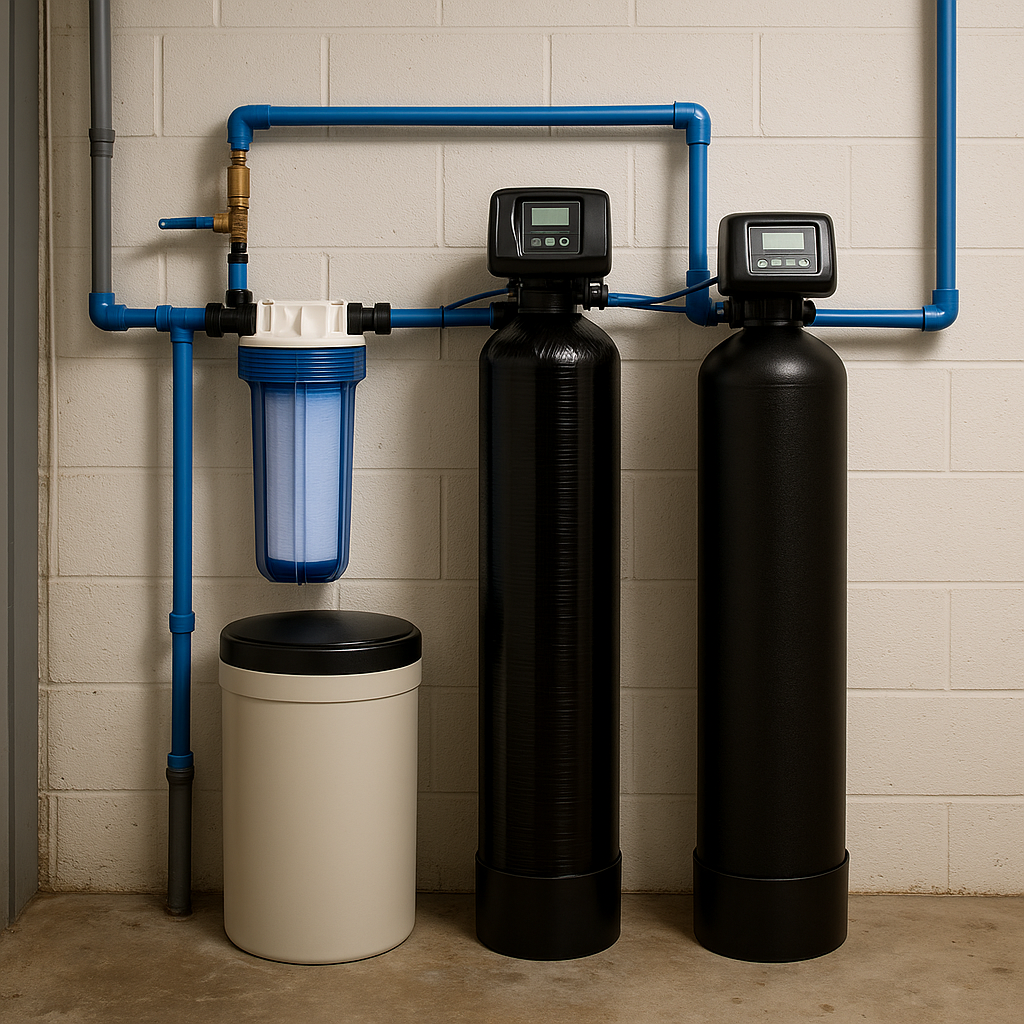
1. Two-Cubic-Foot Multi-Media Tank
-
Bottom layer: sediment filtration (sand, debris, particulates)
-
Middle layer: KDF for heavy metals and partial chlorine reduction
-
Top layer: silver-infused carbon for full chlorine/chloramine removal and bacteriostatic protection
This ensures the entire home receives clean, safe, great-smelling water from every tap and shower.
2. High-Efficiency Water Softener
Using extremely small, high-capacity resin beads (hundreds can fit on a pen tip), the system softens water more efficiently than many competing “high-efficiency” models.
The soft water feeds:
-
All indoor plumbing
-
Both hot and cold lines
-
The RV pad (for guests and outdoor showers)
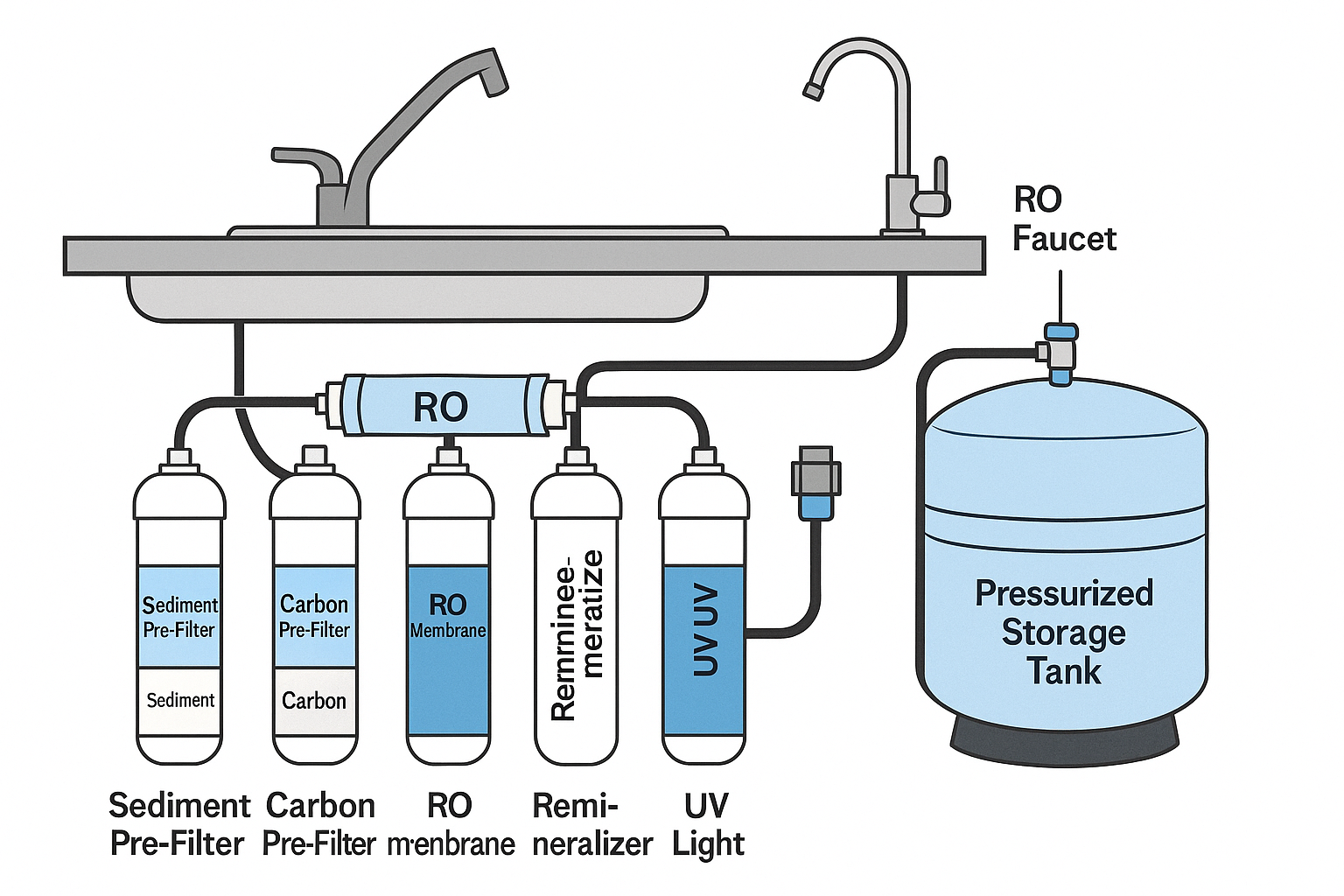
3. All-In-One Reverse Osmosis System (With Extras)
At the kitchen sink sits a self-contained RO system that includes:
-
Sediment + carbon prefilters
-
RO membrane
-
Remineralization cartridge
-
UV disinfection
-
Digital TDS meter displaying mineral levels
Because the incoming water is so poor, post-filtration TDS sits around 2 ppm, which is excellent — then the remineralizer brings flavor and electrolytes back for healthy drinking water.
All drinking water in the home is stored in stainless steel tumblers to avoid microplastics from reusable plastic bottles.
Why This System Works
The system addresses every contaminant category:
-
Physical: sediment
-
Mechanical: hardness minerals
-
Chemical: chlorine, chloramine, VOCs, PFAS, heavy metals
-
Biological: bacteria and viruses
The result?
Cleaner showers, longer-lasting plumbing, better-tasting water, and improved daily comfort. Most importantly, it’s customized to the unique water profile of the home — a crucial step many homeowners skip.