Building a Home That Lasts: Why a Strong Foundation Matters More Than Anything

Introduction
When you peel back the walls and floors of an old home, you never know what you’ll find. In this case, the narrator discovered a century-old house with a cracked brick wall, sinking pillars, termite-damaged supports, and floors that looked like a funhouse attraction. But what begins as a literal foundation repair quickly unfolds into a powerful lesson about building a solid base—whether for your home, your health, or your life.
At Healthy Water and Air, we work with homes every day. We know firsthand that what happens beneath the surface determines everything that happens above it.
Uncovering the Real Problem: A Foundation on Dirt
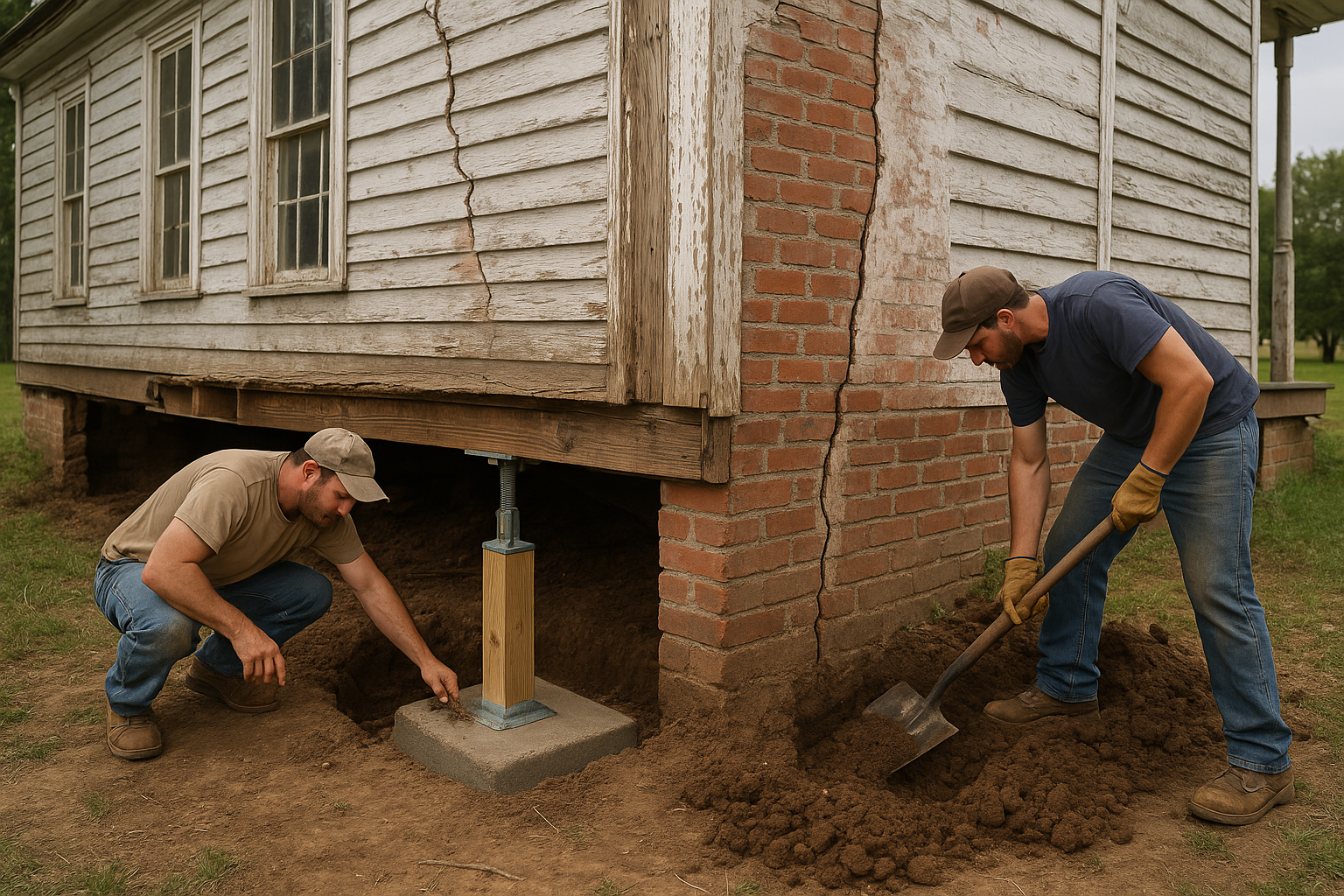
When the home first hit the market, the visible issue was a giant crack running down the exterior brick—a telltale sign of deeper structural trouble. That suspicion was confirmed when the crew discovered that the brick pillars supporting the entire house had been sitting directly on dirt.
Over time, these pillars sank several inches into the ground, separating from the beams they were meant to support. What followed was:
-
Floors more than 7 inches out of level
-
Rotten main support beams
-
Termite-damaged spanners
-
Temporary fixes stacked on top of temporary fixes
This is the story of many older homes: beautifully crafted interiors masking unseen structural compromises.
Step One: Removing the Failed Supports
As the crew began the repair, they removed improvised spacers and entire brick piers—some coming out in one piece because they were never anchored to anything solid.
This lack of support explained how the entire structure had begun to sag.
Digging Down to Rebuild Up
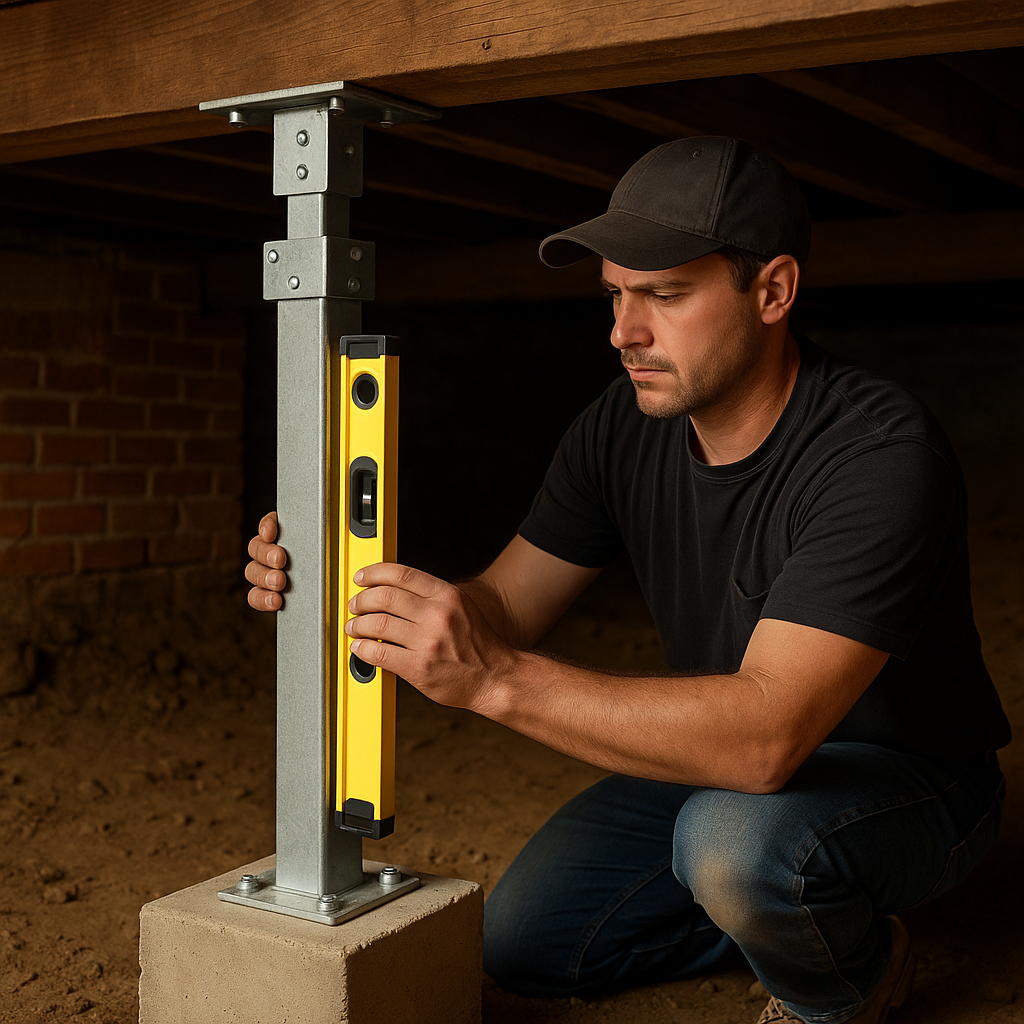
With the old materials cleared out, the team dug new holes and filled each with high-pressure 8,000 PSI concrete, offering vastly more support than the old dirt-and-brick setup ever could.
Into the still-wet concrete, they inserted heat-galvanized brackets designed to resist corrosion and firmly hold new 4×4 pressure-treated posts. The goal was simple:
-
No rot
-
No sinking
-
No shifting
-
No repeat problems for the next hundred years
Using the brackets before the concrete fully cured allowed the team to square and level each anchor precisely—a luxury the original builders in the 1820s apparently didn’t use (despite definitely having levels at the time).
The Art of Re-Leveling a Home
Rebuilding a foundation isn’t just about adding new supports. It’s also about accounting for the temporary jacks used to lift the house while repairs are made.
When the home was lifted, the crew took careful measurements, subtracting:
-
⅛ inch for bolt compression
-
½ inch to counteract the lift
These tiny adjustments ensured that once the jack was lowered, the floors would settle perfectly level—something the house hadn’t seen in nearly a century.
The Hidden Work No One Ever Sees
One of the most profound observations in the transcript is that the most important work—the sealing, insulation, vapor barrier installation, and radon prevention—is work no future homeowner will ever see.
But it’s exactly what will allow the house to remain strong, dry, safe, and livable for generations.
This parallels the world of indoor air and water quality:
The most important systems—filtration, purification, ventilation—are rarely seen, but impact your health every single day. That’s why we often reference solutions like the Reme Halo purifier or the expertise of our partners at At Your Service Pros when discussing whole-home health improvements.
A Foundation for Generations
As the narrator explains, building a strong foundation doesn’t just apply to houses. It applies to families, businesses, fitness goals, and personal development.
A powerful quote from David Brinkley ties it together:
“A successful man is one who can lay a firm foundation with the bricks that are thrown at him.”
For this family, rebuilding this house isn’t just construction—it’s legacy work. It’s preserving the place where multiple generations lived, farmed, and passed down stories. The goal is simple: give the next century’s children a home that stands the test of time.