Healthy Water and Air Blog Builder said: Furnace Not Blowing Enough Heat? Key Warning Signs and How to Fix It

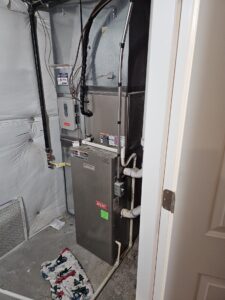
As temperatures drop in Utah, many homeowners discover their furnace isn’t heating the way it should—or isn’t heating at all. If you woke up to a cold home today, you’re not alone. And when in doubt, you can always call At Your Service Pros for free furnace diagnostics from a family-owned team that understands real budget pressures.
Below, we break down the most common signs your furnace is failing, why they happen, and what fixes are typically required so you know exactly what to expect.
Signs Your Furnace Isn’t Working Properly
Weak or No Airflow from Vents
If you feel only a faint trickle of warm air—or none at all—your system may be struggling to push heat through your ducts.
Possible causes:
-
Clogged air filter
-
Blower motor failure
-
Blocked or leaking ductwork
-
Dirty evaporator coil or furnace components
Typical fixes: Replace the filter, inspect ducts, clean the blower, or repair the motor. Our partners at At Your Service Pros can spot these issues quickly during a free diagnostic.
Furnace Runs Constantly but Never Warms the Home
A system that runs nonstop without reaching the thermostat setting is a major red flag.
Possible causes:
-
Undersized furnace
-
Failing heat exchanger
-
Thermostat malfunction
-
Restricted airflow
Typical fixes: Thermostat recalibration, part replacement, or correcting airflow restrictions. In more serious cases, the system may need repair to the heat exchanger.
Cold Spots in Rooms or Uneven Heating
If some rooms are warm while others feel chilly, the heat isn’t distributing correctly.
Possible causes:
-
Duct leaks
-
Poor insulation
-
Dirty filter
-
Failing blower fan
Typical fixes: Seal ducts, replace filters, and test air pressure from the blower to restore balanced heating.
Furnace Turns On but No Heat Is Produced
You may hear your furnace start, but the air coming out remains cold.
Possible causes:
-
Ignition failure
-
Faulty flame sensor
-
Gas supply issue
-
Failed heating elements (electric furnaces)
Typical fixes: Cleaning the flame sensor, replacing the igniter, or restoring proper gas flow. Gas-related issues should always be handled by a licensed HVAC technician for safety.
Strange Noises: Banging, Screeching, Clicking
Unusual sounds are an early sign of mechanical failure.
Possible causes:
-
Loose components
-
Motor bearings wearing out
-
Dirty burners
-
Failing blower wheel
Typical fixes: Tightening components, lubrication, or full part replacement to prevent further damage.
Burner Flame Is Yellow Instead of Blue
A healthy gas furnace flame should burn steady and blue.
A yellow flame may signal:
-
Dirty burners
-
Improper combustion
-
Carbon monoxide risk
If you ever see a yellow flame or smell gas—turn off the furnace and call a professional immediately.
What You Can Try Before Calling a Technician
Homeowners can safely try a few quick checks:
-
Replace or clean the furnace air filter
-
Make sure your thermostat is set to Heat and not Fan Only
-
Check that vents are open and unblocked
-
Reset the breaker if the furnace has tripped it
-
Confirm outdoor intake/exhaust pipes aren’t blocked by snow
If these steps don’t solve the issue, it’s time for a professional diagnosis.
How At Your Service Pros Fixes a Furnace That Won’t Heat
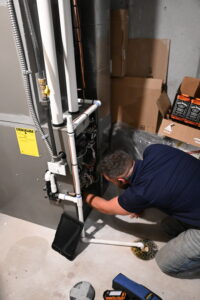
With a free furnace diagnostic, the technician will:
-
Inspect the ignition system
-
Check airflow and blower motor performance
-
Test electrical connections and control board
-
Verify safe gas pressure and combustion
-
Evaluate the heat exchanger
-
Measure temperature rise to confirm proper heating
This process identifies the exact cause so the repair is fast, safe, and cost-effective.
When It’s Time to Consider a Replacement
Even the best furnaces wear out eventually—typically after 15–20 years. Frequent breakdowns, rising energy bills, and poor heating performance are signs it may be more economical to install a new high-efficiency system.
If that’s the case, At Your Service Pros can walk you through your options and provide transparent pricing.
Final Thoughts
If your furnace isn’t heating properly this winter, don’t wait until temperatures drop further. A quick diagnostic can save you money, prevent major repairs, and keep your home comfortable all season long.
Call At Your Service Pros today for free furnace diagnostics and fast, reliable service from a family-owned team you can trust.