Why Anxiety Spikes at Night in “Safe” Homes

Your doors are locked. The lights are off. The house is quiet.
So why does anxiety creep in right when you’re supposed to feel most at ease?
For many Utah homeowners, nighttime anxiety has less to do with thoughts or stress — and more to do with what’s happening to the air and temperature inside the home after dark. Subtle environmental shifts can quietly push your nervous system into alert mode, even when everything feels “safe.”
What Changes in Your Home After the Sun Goes Down
At night, your home doesn’t stay as stable as you might think. Two things shift almost immediately: temperature and airflow.
As outdoor temperatures drop in places like Salt Lake City, Draper, and Park City:
-
Walls and windows cool rapidly
-
HVAC systems change cycles
-
Air pressure inside the home shifts
-
Warm air settles while cool air sinks
Your body senses these changes before your brain does.
Why Temperature Drops Trigger Anxiety
Human bodies are wired to react to cold as a potential threat. Even small temperature drops — especially in bedrooms — can activate the sympathetic nervous system.
This can lead to:
-
Increased heart rate
-
Shallow breathing
-
Restlessness
-
A feeling of unease without a clear cause
In Utah winters, nighttime temperature swings can be dramatic, especially in older homes or mountain areas like Heber and Park City where insulation and airflow vary room to room.
Airflow Shifts You Don’t Notice — But Your Body Does
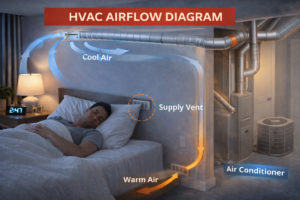
When HVAC systems cycle differently at night, airflow patterns change.
You may experience:
-
Drafts near beds or windows
-
Pressure changes when systems turn on
-
Air that feels “stale” or heavy
-
Quiet pauses followed by sudden airflow bursts
Even when these shifts don’t wake you up, they can keep your nervous system from fully relaxing.
This is why balanced airflow and consistent indoor conditions play such a big role in sleep quality and emotional regulation.
Why Anxiety Feels Worse at Night
At night, there are fewer distractions. Your body has more bandwidth to notice internal signals.
Combine that with:
-
Cooler air
-
Reduced circulation
-
Quieter surroundings
-
Hormonal shifts toward rest
…and small environmental stressors suddenly feel bigger.
Your home isn’t unsafe — it’s just sending mixed signals.
Utah Homes and the “Nighttime Comfort Gap”
Utah homes are built to handle big seasonal extremes. But that efficiency can backfire at night.
Common issues include:
-
Overly aggressive nighttime thermostat setbacks
-
Uneven heating between floors
-
Bedrooms far from HVAC returns
-
Tightly sealed homes with limited fresh air exchange
In areas like Sandy, Layton, and Bountiful, these issues often show up as discomfort rather than obvious system failure.
How to Reduce Nighttime Anxiety Through Home Comfort
You don’t need to overhaul your life to feel calmer at night. Small environmental improvements can make a big difference.
-
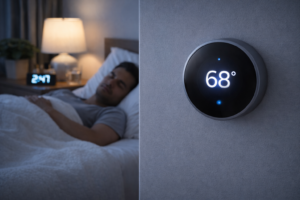
Maintain steady nighttime temperatures
-
Avoid large thermostat setbacks
-
Improve bedroom airflow balance
-
Reduce drafts and pressure swings
-
Support clean, well-circulated indoor air
Many homeowners find that once their home stops “shifting” at night, their body finally settles too.
Professionals focused on whole-home comfort — including partners like https://atyourservicepros.us — often see anxiety and sleep complaints disappear after airflow and temperature issues are corrected.
Calm Comes From Consistency
Anxiety doesn’t always come from your thoughts. Sometimes it comes from a body trying to make sense of its environment.
When your home provides steady warmth, gentle airflow, and quiet consistency, your nervous system gets the message: you’re safe.
If nighttime anxiety has been creeping in without a clear reason, your home’s temperature and airflow may be the missing piece.
References
-
National Sleep Foundation – How Temperature Affects Sleep
https://www.sleepfoundation.org/bedroom-environment/best-temperature-for-sleep -
Cleveland Clinic – Anxiety at Night: Why It Happens
Click here -
U.S. Environmental Protection Agency – Indoor Air Quality and Comfort
Click here -
Harvard Health Publishing – How the Nervous System Responds to Stress
https://www.health.harvard.edu/staying-healthy/understanding-the-stress-response -
Energy.gov – Managing Your Home’s Comfort
Click here - Need service? Call (801) 609-1551 or schedule an appointment online.