Why Door Gaps Matter More Than People Think

Most people never think twice about the small gap under their bedroom door. It’s just there. No big deal, right?
Actually… it might be a bigger deal than you realize.
That tiny space plays a critical role in something called pressure balance — and when pressure inside your home is off, it can affect airflow, comfort, energy bills, and even indoor air quality. In Utah homes where HVAC systems work hard year-round, those little gaps can quietly make a big difference.
What Is Pressure Balance in a Home?
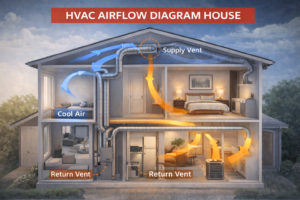
Your home is constantly moving air. Every time your furnace or AC runs, air is supplied into rooms — and it has to return somewhere.
That’s where pressure balance comes in.
When air flows into a room:
-
It needs a path back to the return duct
-
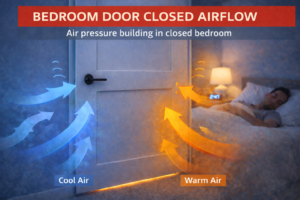
If it can’t escape, pressure builds up
-
That pressure pushes air into unintended places
In tightly sealed homes across Salt Lake City, Sandy, and Draper, this matters more than ever. Modern construction reduces natural air leakage, which means airflow pathways must be intentional.
Why Door Gaps Exist in the First Place
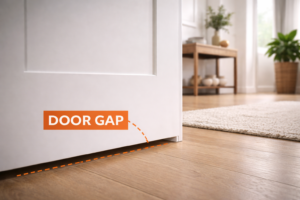
That space under your door isn’t a construction mistake. It’s usually there to:
-
Allow return airflow when doors are closed
-
Prevent pressure buildup in bedrooms
-
Support consistent HVAC circulation
Without that gap — or another return path — closing a door can essentially turn a room into a pressurized box.
And that’s when problems start.
What Happens When Pressure Isn’t Balanced?
When pressure builds up inside a closed room, the HVAC system keeps trying to push air in. Since it can’t return properly, air gets forced through cracks in walls, ceilings, outlets, and attic spaces.
This can cause:
-
Whistling or popping sounds
-
Uneven room temperatures
-
Drafts near windows or baseboards
-
Doors that resist closing
-
Increased energy bills
Worse, it can pull in unwanted air from attics, crawlspaces, or garages — areas that often contain dust, insulation particles, or pollutants.
The U.S. Department of Energy explains how air pressure differences can drive unwanted air infiltration and energy loss in homes (Energy.gov – Air Sealing Basics).
Utah Homes and Pressure Problems
Utah’s climate amplifies these issues.
In winter:
-
Warm air rises
-
Cold air sinks
-
Stack effect increases pressure differences
In summer:
-
AC systems run longer cycles
-
Bedrooms with closed doors get stuffy
-
Upper floors feel warmer
Homes in Bountiful, Layton, and Park City often experience stronger pressure imbalances due to elevation changes and multi-level layouts.
The Link Between Door Gaps and Indoor Air Quality
Pressure imbalance doesn’t just affect comfort — it affects what you’re breathing.
If your home becomes negatively pressurized (meaning more air is leaving than entering), it can pull in:
-
Dust from attics
-
Fumes from garages
-
Radon from crawlspaces
-
Outdoor pollutants during inversion season
The Environmental Protection Agency notes that pressure-driven airflow significantly impacts indoor air quality (EPA – Indoor Air Quality Basics).
Maintaining proper airflow pathways — including door gaps or transfer grilles — helps prevent this silent contamination.
Signs Your Home May Have Pressure Issues
You don’t need special equipment to spot warning signs.
Watch for:
-
Bedrooms that feel hotter or colder than the rest of the house
-
Doors that slam shut or won’t stay open
-
Increased dust in certain rooms
-
HVAC systems that seem loud or strained
-
Musty smells when doors stay closed
If these sound familiar, pressure balance could be the hidden issue.
Solutions That Don’t Require Major Renovations
The good news? Fixing pressure imbalance is often simpler than people expect.
Options include:
-
Ensuring adequate door undercuts (typically ¾ inch to 1 inch)
-
Installing return air pathways or transfer grilles
-
Adding jump ducts between rooms and hallways
-
Balancing airflow through professional HVAC adjustments
Whole-home airflow evaluations can identify these imbalances quickly and prevent long-term system strain.
Professionals focused on indoor comfort — including partners like https://atyourservicepros.us — frequently see pressure issues mistaken for “bad HVAC systems” when the real culprit is airflow design.
Small Gap, Big Impact
That small space under your door might not look important. But it’s part of a carefully balanced system that keeps your home comfortable, efficient, and healthy.
When air can move freely, your HVAC system works less, your rooms feel more consistent, and your indoor air stays cleaner.
Sometimes the smallest details are the ones doing the heaviest lifting.
Need service? Call (801) 609-1551 or schedule an appointment online.
References
-
U.S. Department of Energy – Air Sealing and Airflow in Homes
https://www.energy.gov/energysaver/air-sealing-your-home -
U.S. Environmental Protection Agency – Indoor Air Quality Basics
https://www.epa.gov/indoor-air-quality-iaq/introduction-indoor-air-quality -
Building Science Corporation – Are We Sealing The Right Walls In Buildings?
https://buildingscience.com/documents/building-science-insights-newsletters/bsi-108-are-we-sealing-right-walls-buildings -
ENERGY STAR – Duct Sealing Guide
https://www.energystar.gov/saveathome/heating-cooling/duct-sealing