Why Extension Cords and Power Strips Change the “Feel” of a Room

Ever walk into a room and it just feels… off? Not necessarily hot. Not exactly messy. Just slightly tense or uncomfortable.
Believe it or not, extension cords and overloaded power strips can subtly change how a room feels — both physically and psychologically. In Utah homes, especially during long winters in Salt Lake City, Sandy, Draper, and Layton when we’re indoors more often, small environmental stressors become much more noticeable.
Let’s talk about electrical density, subtle heat, and clutter stress — and why they matter more than you think.
The Invisible Warmth You Don’t Notice
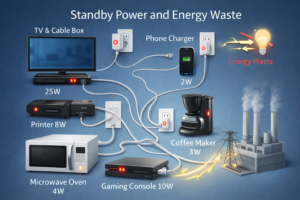
Every device plugged into a power strip generates heat. Even when electronics aren’t actively in use, many draw “phantom” or standby power. The U.S. Department of Energy estimates that standby power can account for 5–10% of residential electricity use (energy.gov).
That energy doesn’t disappear.
It turns into low-level heat.
In a single device, it’s minor. But combine:
-
Multiple power strips
-
Chargers
-
Space heaters
-
Gaming consoles
-
Office equipment
-
TVs and streaming devices
Now you’ve increased the electrical density of the room — meaning more concentrated energy use in one space.
In smaller rooms, home offices, or basement bedrooms (common in Bountiful and Sandy homes), that added heat can slightly shift temperature balance. It may only raise the ambient temperature by a degree or two, but paired with poor air circulation, it can change comfort noticeably.
Electrical Density and Airflow
Heat rises. So if you have multiple power strips near the floor or behind furniture, warm pockets can develop. In winter, when Utah homes are sealed tightly to keep inversion air out, subtle heat pockets linger longer.
If your HVAC system already struggles with air mixing — something we often see in multi-level homes across Draper and Park City — these micro heat zones can make certain areas feel stuffy while others remain cool.
That imbalance affects comfort perception.
According to ASHRAE (American Society of Heating, Refrigerating and Air-Conditioning Engineers), thermal comfort depends not only on temperature, but air movement, radiant heat, humidity, and occupant perception (ashrae.org).
So yes, a cluster of cords can literally influence how a room feels.
The Subtle Stress of Visual Clutter
Now let’s talk about the psychological side.
Extension cords and power strips often create visual clutter. And clutter has measurable effects on stress levels. Research published through Princeton University Neuroscience Institute found that visual clutter competes for attention and reduces the brain’s ability to focus (princeton.edu).
Even if you’re not consciously bothered by a tangle of cords, your brain registers it as unfinished or chaotic.
That low-level tension can translate into:
-
Feeling restless in the room
-
Difficulty relaxing
-
Trouble focusing
-
Increased irritability
In a home office in Heber or a bedroom in Layton, that matters.
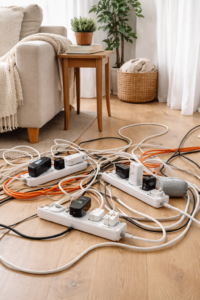
Rooms with exposed wiring, tangled cables, and overloaded strips often feel less calm — even when everything else is clean.
Fire Risk and Heat Buildup
Beyond comfort and stress, overloaded power strips can pose real safety risks.
The National Fire Protection Association (NFPA) reports that electrical distribution systems are a leading cause of home fires, often due to overloaded circuits or improper extension cord use (nfpa.org).
When cords are:
-
Daisy-chained together
-
Covered by rugs
-
Pinched behind furniture
-
Used with high-wattage appliances
Heat builds up. That warmth may not be dramatic, but it changes air temperature locally — and can dry out already low-humidity Utah winter air.
If you’re already working to improve indoor air quality in your Salt Lake City home, reducing unnecessary heat sources helps maintain balance.
How It Affects Room “Energy”
Have you ever noticed that newly renovated rooms feel lighter and calmer?
Often it’s because:
-
Outlets were added
-
Wires were hidden
-
Devices were centralized
-
Airflow improved
Lower electrical clutter reduces both physical heat pockets and visual stress. That combination improves comfort perception.
In fact, improving overall indoor air balance — through better airflow, humidity control, and layout — can make a room feel fresher without changing thermostat settings. You can explore ways to improve indoor air quality and circulation to support a more comfortable environment year-round.
Utah Winters Make It More Noticeable
During winter inversion in Salt Lake Valley, homes stay closed for weeks. Windows remain shut. Air exchange is limited.
Add:
-
Holiday lighting
-
Space heaters
-
Extra chargers
-
Home office setups
Electrical density increases significantly.
At the same time, humidity drops below 30% in many homes. The Environmental Protection Agency notes that low humidity can increase discomfort and static electricity (epa.gov/indoor-air-quality-iaq).
Static plus visible cords plus subtle warmth equals a room that feels tense — even if you can’t quite explain why.
Simple Ways to Improve Room Feel
Fortunately, this is one of the easier comfort issues to fix.
Consolidate Devices
Use fewer, high-quality surge protectors rather than multiple cheap strips. Avoid daisy-chaining cords together.
Add Permanent Outlets
If a room relies heavily on extension cords, it may simply need additional outlets. A licensed electrician can add them safely and reduce electrical clustering.
Improve Air Circulation
If electronics create warm pockets, proper air movement helps distribute that heat evenly. Balanced airflow reduces stuffiness and improves comfort perception.
If your home already struggles with uneven temperatures, reviewing your HVAC airflow setup can make a noticeable difference.
Declutter Visually
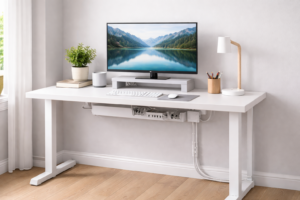
Use cable management sleeves, wall channels, or furniture that conceals wiring. Even simple organization lowers cognitive stress.
Maintain Proper Humidity
Balanced humidity (30–40% in winter) offsets static and improves comfort. Whole-home humidifiers can help stabilize dry indoor air common across Park City and Draper.
When to Take It Seriously
If you notice:
-
Warm or hot power strips
-
Frequent breaker trips
-
Flickering lights
-
Burning smells
-
Discolored outlets
It’s time for a professional inspection.
Electrical systems should never feel hot to the touch.
If your home comfort issues involve airflow, temperature imbalance, or system stress, a full evaluation can identify contributing factors.
Need service? Call (801) 609-1551 or schedule an appointment online.
Small Changes, Big Difference
Rooms don’t just feel comfortable because of temperature.
They feel comfortable when:
-
Air moves properly
-
Heat is evenly distributed
-
Humidity is balanced
-
Visual clutter is minimized
-
Systems operate safely
Extension cords and power strips seem harmless. But when they accumulate, they quietly affect heat, airflow, stress, and safety.
In Utah homes — especially during long indoor seasons — those subtle shifts add up.
Sometimes improving how a room feels isn’t about turning up the heat.
It’s about reducing the invisible load.
References
-
U.S. Department of Energy – Standby Power Use: https://www.energy.gov/femp/measuring-standby-power
-
American Society of Heating, Refrigerating and Air-Conditioning Engineers (ASHRAE) – Thermal Comfort Standards: https://www.ashrae.org/file%20library/technical%20resources/standards%20and%20guidelines/standards%20addenda/55-1995_addendum-a.pdf
-
Princeton University Neuroscience Institute – Effects of Visual Clutter: https://ipalab.princeton.edu/sites/g/files/toruqf2841/files/documents/Charlotte2023.pdf
-
National Fire Protection Association – Electrical Fire Statistics: https://www.nfpa.org/education-and-research/research/nfpa-research/fire-statistical-reports/home-fires-caused-by-electrical-failure-or-malfunction
-
U.S. Environmental Protection Agency – Indoor Air Quality Basics: https://www.epa.gov/indoor-air-quality-iaq/introduction-indoor-air-quality