Why You Sleep Better During Power Outages in Utah Homes

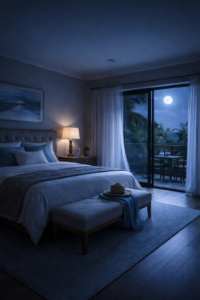
Have you ever noticed that when the power goes out — whether during a summer storm in Sandy or a winter outage in Bountiful — you actually sleep better? The house gets quieter. The air feels calmer. The darkness feels deeper.
It’s not just in your head. Better sleep during a power outage often comes down to three simple things: reduced electromagnetic load (EMF exposure), true silence, and natural darkness. And when you understand how those affect your body, it starts to make a lot of sense.
The Silence Your Brain Has Been Waiting For
Let’s start with the most obvious change: it gets quiet.
When the power goes out, so do:
-
HVAC fans
-
Refrigerators cycling on and off
-
Electronics humming
-
Air purifiers running
-
Traffic sounds dampened by fewer lights
Even if you don’t consciously notice these background sounds, your brain does. This is called ambient noise — low-level background sound that stays constant.
According to the National Sleep Foundation, noise — even subtle noise — can interrupt sleep cycles and reduce deep sleep stages (sleepfoundation.org).
So when your house suddenly becomes silent, your nervous system relaxes. Your brain no longer has to filter out mechanical noise. That reduction in stimulation can make it easier to fall asleep and stay asleep.
And here in Utah, where HVAC systems often run hard during hot summers in Layton or freezing winters in Park City, that constant cycling can be more disruptive than we realize.
Natural Darkness Resets Your Body Clock
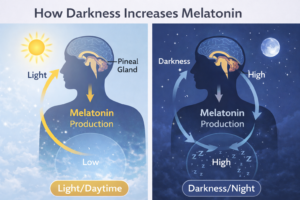
Next comes something even more powerful: darkness.
When the power is out, artificial light disappears. There are no glowing alarm clocks. No hallway nightlights. Not even standby lights from TVs and routers.
Your body runs on something called a circadian rhythm — your internal clock that tells you when to feel awake and when to feel sleepy. Light exposure at night suppresses melatonin, the hormone that helps you sleep.
Harvard Medical School explains that even small amounts of artificial light at night can interfere with melatonin production and reduce sleep quality (health.harvard.edu).
During a power outage, your home returns to natural darkness. And that signals your brain: it’s time to rest.
Especially along the Wasatch Front, where light pollution from Salt Lake City can already interfere with nighttime darkness, removing indoor light sources makes a noticeable difference.
Darkness isn’t just cozy.
It’s biological.
Reduced Electromagnetic Load (EMF)
Now let’s talk about the piece most people don’t think about — electromagnetic fields, often shortened to EMFs.
An EMF (electromagnetic field) is a form of energy produced by electrical wiring and wireless devices. Wi-Fi routers, smart meters, televisions, and even home wiring emit low levels of electromagnetic energy.
When the power goes out, that electromagnetic load drops significantly.
Research on EMF exposure and sleep is still evolving, but the World Health Organization notes that environmental factors — including electromagnetic exposure — may influence sleep patterns in sensitive individuals (who.int).
Now, to be clear, household EMFs are generally considered low risk at typical levels. However, some people report better sleep when electronics are reduced or powered down at night.
So during a power outage, when:
-
Wi-Fi routers shut off
-
Devices stop charging
-
Electrical current drops
-
Screens go dark
Your environment becomes electrically quieter.
And for some Utah homeowners, especially those already focused on improving indoor air quality and home wellness, that difference feels noticeable.
Cooler, Fresher Air
There’s another factor we can’t ignore.
During an outage, HVAC systems stop running. In some seasons, that means your home cools slightly. Research shows that cooler room temperatures — around 60–67°F — support better sleep, according to the Cleveland Clinic (my.clevelandclinic.org).
While we don’t recommend shutting off your HVAC completely, optimizing airflow and indoor air quality can create that same fresh, breathable feeling without needing a blackout.
Healthy Water and Air helps homeowners across Draper, Heber, and Salt Lake City improve indoor air quality and airflow balance so your bedroom environment supports deeper sleep year-round.
Because sleep isn’t just about mattresses.
It’s about air.
What This Means for Utah Homes
Now let’s connect the dots.
If you sleep better during power outages, your body may be responding to:
-
Less background noise
-
Reduced artificial light
-
Lower electromagnetic exposure
-
More natural temperature shifts
-
Improved air stillness
The good news? You don’t need a blackout to recreate those benefits.
Instead, you can:
-
Turn off Wi-Fi routers at night
-
Remove small LED light sources in bedrooms
-
Use blackout curtains
-
Run quieter HVAC systems
-
Upgrade filtration for cleaner air
Proper HVAC design and airflow balancing can reduce unnecessary cycling and noise, which is especially important in multi-level homes in Sandy or Bountiful where systems may overwork.
If your system runs loudly or unevenly, it may be time for an evaluation.
Need service? Call (801) 609-1551 or schedule an appointment online.
Because your home should help you rest — not fight against it.
Creating a Sleep-Friendly Home Environment
Let’s simplify it.
To sleep better consistently, focus on three fundamentals:
Quiet
Reduce mechanical noise. Consider HVAC maintenance to ensure fans and ducts operate smoothly and quietly.
Dark
Eliminate artificial light in sleeping areas. Even small LEDs can disrupt melatonin production.
Clean Air
Balanced humidity and clean filtration improve breathing comfort overnight. Explore whole-home solutions that support healthy indoor environments across Utah’s dry climate.
When airflow is balanced, humidity is controlled, and noise is minimized, your home can feel just as restful as a quiet mountain cabin in Park City — even when the power stays on.
References
-
National Sleep Foundation – Noise and Sleep: https://www.sleepfoundation.org/noise-and-sleep
-
Harvard Health – Blue Light and Sleep: https://www.health.harvard.edu/staying-healthy/blue-light-has-a-dark-side
-
World Health Organization – Electromagnetic Fields: https://www.who.int/teams/environment-climate-change-and-health/radiation-and-health/non-ionizing/emf
-
Cleveland Clinic – Best Temperature for Sleep: https://health.clevelandclinic.org/what-is-the-ideal-sleeping-temperature-for-my-bedroom

