Why Your Basement Finish Can Destroy Your Furnace: A Real-World Ductwork Lesson Every Homeowner Should Hear

Introduction
Every day in the HVAC world, technicians walk into homes where the equipment is brand-new, the homeowner is confident everything was installed “to code,” and yet the system is already doomed to fail. Why? Because the ductwork — the air distribution system that actually makes heating and cooling possible — was never sized correctly.
In today’s post, we’re breaking down a real-world scenario: a homeowner finishing his basement who believed his current furnace and AC could easily support added supplies and returns. The problem? His ductwork physically couldn’t move the amount of air his system needed. And this is one of the most common (and most expensive) HVAC mistakes we see in Utah.
This is your guide to understanding CFM, duct sizes, static pressure, and how to protect your HVAC investment — with nothing more than a tape measure and Google.
Why Duct Size Matters More Than Homeowners Realize
The Hidden Problem Inside New Construction
Builders often hire the lowest-cost subcontractor — not necessarily the most knowledgeable. Inspectors miss things. Homebuyers assume everything is designed correctly. And many HVAC contractors themselves skip proper duct design.
The result? Undersized trunk lines, inadequate returns, and systems that technically “run” but never perform correctly.
This is exactly what happened in our story. The homeowner was told his new system was “big enough” to support finishing the basement. Once we measured the ductwork, the reality was obvious:
His main trunk line was 8×24 inches — far too small for his 3.5-ton (1,400+ CFM) air conditioner.
Yet he firmly believed everything was “just fine.”
CFM 101: How Much Air Your System Actually Needs
CFM stands for cubic feet per minute, or how much air your blower can move through the system. Tonnage and CFM are directly linked:
-
1 ton of cooling ≈ 400 CFM
-
3.5 tons = 1,400 CFM (minimum)
-
At Utah’s 4,800 ft elevation, systems require even more CFM to achieve rated performance.
So if your ductwork can’t handle 1,400 CFM, your system is suffocating.
The Real Capacity of an 8×24 Duct
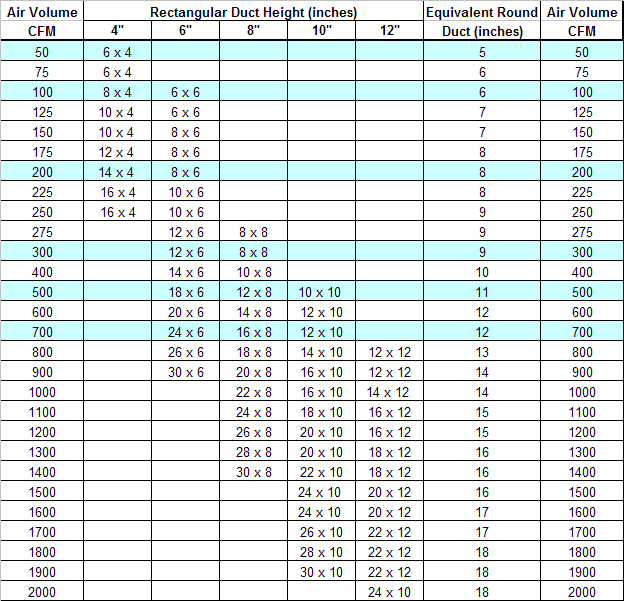
Search “8×24 duct CFM” and you’ll find charts from dozens of reputable HVAC companies.
Across the board:
-
Industry-standard 0.07 static pressure design: ~930 CFM
-
Absolute best-case stretch scenario: ~1,100 CFM
Either way, it’s nowhere near the 1,400+ CFM required for a 3.5-ton AC in Utah.
This means:
👉 No amount of extra supplies or returns added to the same undersized trunk can increase airflow.
You can only move as much air as the duct can physically carry.
Static Pressure: The “Blood Pressure” of Your HVAC System
When you force too much air through undersized ductwork, static pressure goes through the roof. That leads to:
-
Overheating
-
Cracked heat exchangers
-
Blower motor failures
-
Shortened system lifespan
-
Voided warranties (yes — this happens often)
Manufacturers require proper ductwork. If they discover high static pressure caused a component failure, they can legally decline warranty coverage.
In our homeowner’s case, his system was practically guaranteed to fail within 6–8 years.
Why Adding More Returns to the Same Undersized Trunk Doesn’t Work
The homeowner asked us to add a return into the same 8×24 duct.
But if the duct is already maxed out at ~1,000 CFM:
-
Adding a new return doesn’t increase capacity
-
Adding new supply branches doesn’t increase capacity
-
Nothing increases capacity except larger trunk lines
This is a hard truth, but an unavoidable one.
Why We Refused to Perform the Work
He wanted to finish his basement with:
-
Double doors (taking up the only wall where a proper return could go)
-
Added supplies
-
Added return air
But he refused to allow a second return line on the opposite side of the furnace. Without it, the duct system simply couldn’t function safely.
At Healthy Water and Air, we do not perform work that will knowingly damage equipment or put homeowners at risk. So we walked away — because the only honest bid was one he didn’t want to hear.
The Likely Future for This Homeowner
If he proceeds the way he intends, here’s what almost certainly happens:
-
The basement is finished.
-
Double doors eliminate return-air placement options.
-
The furnace runs for years with insufficient airflow.
-
Heat exchanger cracks from chronic overheating.
-
Blower motor fails repeatedly.
-
Manufacturer voids warranty for improper duct design.
-
He pays $1,000–$2,000 trying to “fix” comfort issues.
-
Eventually, he is forced to replace the furnace entirely.
All of which could have been prevented with a tape measure and basic research.
How YOU Can Check Your Own Ductwork (Before You Get Bids)
You don’t need to be a contractor. You don’t need fancy tools. Just follow these steps:
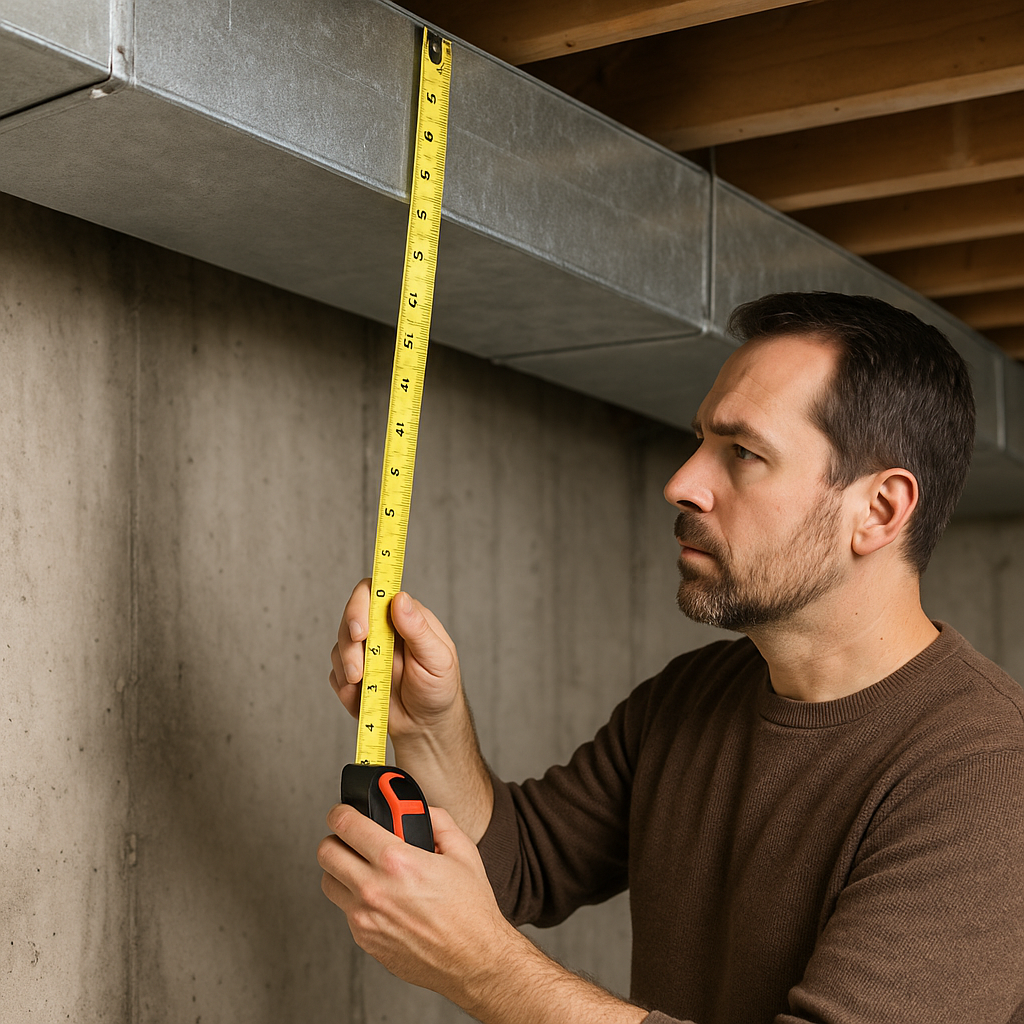
Step 1 — Measure your supply and return trunks
Use any tape measure (even the ugly yellow ones). Measure width × height.
Example:
8 inches × 24 inches
Step 2 — Google: “CFM for [your duct size] ductwork”
You will instantly find dozens of charts from HVAC companies across the country.
Step 3 — Compare your duct CFM vs. your system requirements
-
Furnace and AC tonnage is on the data plate
-
AC tonnage × 400 = required CFM
-
Utah homeowners should add 10–15% for altitude
Step 4 — If the numbers don’t match… they don’t match
Airflow is physics — no contractor can “wish” more CFM through an undersized duct.
Why So Many Homes Have Undersized Ductwork
The uncomfortable truth:
-
Builder-grade installations cut corners
-
Inspectors are overworked and miss things
-
Many technicians never learned proper duct design
-
Homeowners rarely verify anything behind the walls
But YOU CAN.
And the more informed you are, the harder it becomes for anyone to give you bad information.
Key Takeaway
Your HVAC system is only as healthy as the ductwork feeding it. Before finishing a basement, adding new supplies, or trusting a bid that sounds “too good to be true,” take five minutes to measure your ductwork and compare it to published CFM charts.
This simple step can save you thousands in repairs, years of frustration, and prevent premature furnace failure.
References
(General HVAC airflow facts expanded from industry-standard sources.)