Why Your Body Knows Something Is Off Before You Do

Have you ever walked into a place and instantly felt uneasy—even though nothing obvious seemed wrong?
Maybe you felt slightly tired, tense, or distracted. Sometimes people describe it as “something feels off,” even when they can’t explain why.
That reaction is actually very real. Your body constantly gathers information from the world around you. Long before your conscious mind figures things out, your subconscious nervous system is already sensing your environment and adjusting your body’s response.
Understanding why your body knows something is off before you do reveals how closely our health, emotions, and environment are connected.

Your Body Is Always Gathering Information
Even when you aren’t thinking about it, your body is constantly reading signals from the environment.
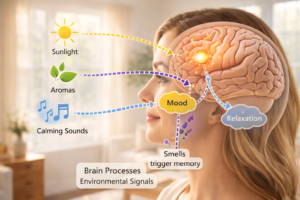
Your senses—sight, smell, hearing, touch, and even internal signals from your lungs and skin—send thousands of pieces of information to your brain every second.
Your brain uses that information to answer one basic question:
“Is this environment safe and comfortable?”
Most of this process happens automatically through the autonomic nervous system, the part of the nervous system responsible for automatic functions like breathing, heart rate, digestion, and stress responses.
According to the National Institute of Neurological Disorders and Stroke, the autonomic nervous system continuously monitors the environment and adjusts bodily functions without conscious effort.
This constant monitoring is a major reason why your body knows something is off before you do.
The Brain Processes Feelings Before Thoughts
One reason we sometimes feel discomfort before we understand it is that the brain processes emotional and physical signals faster than logical thinking.
The brain’s limbic system—often called the emotional center—evaluates situations almost instantly. It scans for subtle cues like unusual smells, temperature shifts, unfamiliar sounds, or changes in lighting.
When something seems unusual, your brain may trigger small responses such as:
-
Feeling slightly tense
-
Becoming more alert
-
Experiencing fatigue or brain fog
-
Feeling distracted or restless
Harvard Health explains that the brain often produces emotional reactions before conscious reasoning occurs, which helps humans react quickly to potential threats.
This rapid response system helped humans survive throughout history.
Today, it still explains why your body knows something is off before you do, even in everyday environments.
Your Environment Influences Your Health More Than You Realize
The spaces we spend time in—especially our homes—have a powerful effect on how our bodies feel.
Environmental factors that can subtly influence health include:
-
Lighting levels
-
Noise
-
Air quality
-
Temperature
-
Humidity
-
Chemical exposure
-
Visual clutter or stress
Even when these factors seem minor, your body is constantly adjusting to them.
For example:
-
Very dry air can irritate the respiratory system
-
Poor lighting can strain the eyes and affect mood
-
Constant background noise can increase stress levels
-
Stale air can cause fatigue or headaches
According to the World Health Organization, environmental conditions inside homes play a major role in physical and mental well-being.
These subtle environmental signals are another reason why your body knows something is off before you do.
Your Nervous System Protects You Automatically
Your body’s early-warning system evolved to keep you safe.
When your nervous system detects something unusual, it may trigger what scientists call a stress response. This response prepares the body to react quickly if needed.
In small amounts, this response is helpful.
It may cause:
-
Increased awareness
-
Faster breathing
-
Slight muscle tension
-
Heightened focus
But if environmental stressors are constant—such as poor sleep conditions, uncomfortable temperatures, or irritating surroundings—your body may remain slightly on edge.
Over time, that can lead to symptoms like:
-
Fatigue
-
Trouble concentrating
-
Irritability
-
Headaches
-
Restlessness
The Centers for Disease Control and Prevention (CDC) notes that long-term environmental stressors can affect both physical and mental health.
Why Some Homes Feel Better Than Others
Have you ever noticed that some homes feel calm and comfortable, while others feel slightly uncomfortable even when everything looks nice?
Often, the difference comes from small environmental details that your body senses automatically.
These may include:
-
Balanced lighting
-
Comfortable temperatures
-
Quiet surroundings
-
Clean, fresh air
-
Natural airflow
When these factors are balanced, your nervous system relaxes.
Your body feels safe, comfortable, and calm.
When they aren’t balanced, your body may react with subtle signals—even before you consciously notice them.
That’s another reason why your body knows something is off before you do.
Listening to Your Body’s Signals
Sometimes people dismiss subtle feelings of discomfort. But those sensations can be useful signals.
Your body may be noticing environmental conditions that your conscious mind hasn’t processed yet.
Pay attention if you frequently notice:
-
Feeling tired in certain rooms
-
Headaches that disappear when you leave a space
-
Trouble concentrating indoors
-
Restlessness or tension in certain environments
While these signals don’t always indicate a specific problem, they can help you recognize when your surroundings may need adjustment.
Improving lighting, airflow, temperature balance, and overall comfort can help create an environment that supports both mental and physical well-being.
Healthy environments support healthy bodies.
Creating a Home That Supports Your Health
The goal isn’t perfection—it’s balance.
Small improvements to your home environment can make a noticeable difference in how your body feels day to day.
Consider focusing on:
Comfortable Lighting
Natural light supports mood and circadian rhythms.
Quiet and Calm Spaces
Reducing constant background noise helps the nervous system relax.
Balanced Temperature
Consistent temperatures reduce stress on the body.
Healthy Indoor Air
Clean airflow and proper humidity levels help support breathing comfort.
When these elements come together, your home becomes a place where your body naturally relaxes.
And when your body feels safe and comfortable, your mind follows.

References
National Institute of Neurological Disorders and Stroke – Autonomic Nervous System https://www.ninds.nih.gov/health-information/public-education/brain-basics
Harvard Health Publishing – Brain and Emotional Responses https://www.health.harvard.edu/healthy-aging-and-longevity/understanding-the-stress-response
World Health Organization – Healthy Housing and Well-Being https://www.who.int/publications/i/item/9789241550376
Centers for Disease Control and Prevention – Environmental Health https://www.cdc.gov/health-communication/pdf/health-equity-guide-infographic-508.pdf#:~:text=Health%20Equity%20Guide,drive%20this%20plan.
