Why Your Hair Feels Different in Different Homes

Have you ever washed your hair at someone else’s house — or in a hotel — and noticed it feels completely different afterward?
Maybe it feels softer. Maybe it feels dry or heavy. Sometimes it won’t style the way it normally does. Many people assume it’s because of shampoo or styling products.
But often the real reason is the home environment itself.
Several hidden factors affect how your hair behaves after a shower, including mineral load in the water, steam levels in the bathroom, and ventilation inside the home. Together, these factors can change how your hair absorbs moisture and how it feels throughout the day.
Understanding why your hair feels different in different homes can help explain changes in hair texture, shine, and manageability.
Water Minerals Affect How Hair Feels
One of the biggest reasons why your hair feels different in different homes is the mineral content in the water.
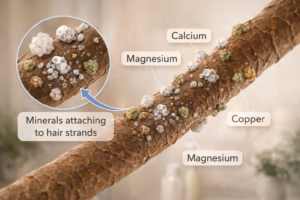
Many homes — especially in Utah — have hard water, which means the water contains higher levels of dissolved minerals like calcium and magnesium.
These minerals aren’t harmful to drink, but they can interact with hair during washing.
Hard water minerals can:
-
Attach to hair strands
-
Reduce shampoo lather
-
Leave residue on the scalp
-
Make hair feel rough or heavy
According to the U.S. Geological Survey, hard water occurs when groundwater passes through mineral-rich rock and collects calcium and magnesium before entering residential plumbing.
When minerals coat hair strands, they can prevent moisture from penetrating the hair shaft, which can change how hair looks and feels after drying.
That’s a major reason why your hair feels different in different homes, especially when traveling or moving between cities with different water sources.
Steam Changes How Hair Absorbs Moisture
Another factor many people overlook is bathroom steam.
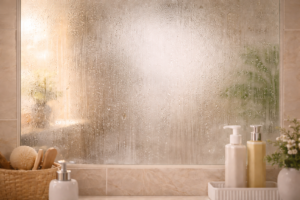
When you shower, warm water creates steam — water vapor suspended in the air. This steam temporarily raises humidity levels in the bathroom.
Humidity affects how hair behaves.
Hair fibers absorb moisture from the surrounding air, which can cause hair to:
-
Expand
-
Curl or frizz
-
Feel softer or heavier
-
Lose its shape or style
According to the American Academy of Dermatology, hair is highly sensitive to humidity because the structure of hair fibers allows them to absorb moisture from the air.
In bathrooms with heavy steam buildup, hair may absorb more moisture immediately after a shower. In well-ventilated bathrooms, moisture dissipates faster, leaving hair feeling lighter.
This interaction between water vapor and hair is another key reason why your hair feels different in different homes.
Bathroom Ventilation Plays a Hidden Role
Ventilation might not seem like something that affects hair, but it can make a big difference.
Bathroom ventilation systems help remove warm, humid air after a shower. When ventilation is strong, steam clears quickly and the room returns to normal humidity levels.
When ventilation is weak, moisture lingers longer.
That lingering humidity can influence how hair dries and settles after washing.
Poor ventilation may lead to:
-
Slower drying times
-
Increased frizz
-
Hair that feels heavier or damp longer
The Home Ventilating Institute explains that bathroom exhaust fans help control humidity and remove excess moisture that accumulates during showers.
This is why why your hair feels different in different homes can sometimes come down to something as simple as how quickly steam leaves the bathroom.
Temperature and Airflow Also Affect Hair
Beyond water minerals and steam, the overall environment in a home can also influence hair texture.
Airflow and humidity levels throughout the house affect how hair behaves once you leave the bathroom.
In homes with very dry air, hair may feel:
-
Static or flyaway
-
Brittle
-
Harder to style
In more humid environments, hair may feel:
-
Softer
-
More flexible
-
Prone to frizz
According to the International Journal of Cosmetic Science, hair fibers react to both humidity and mineral buildup, which together influence hair texture and styling behavior.
That combination of water minerals, steam, and ventilation helps explain why your hair feels different in different homes.
Why Utah Homes Often Affect Hair Texture
Homes along the Wasatch Front have several environmental factors that influence hair.
These include:
-
Mineral-rich groundwater
-
Dry desert climate
-
Seasonal humidity swings
-
Heating systems that dry indoor air
Together, these factors create conditions where hair may behave differently depending on the home environment.
For example:
-
A home with hard water and dry indoor air may cause hair to feel rough or static-prone.
-
A home with softer water and better humidity balance may leave hair feeling smoother and more manageable.
Even small environmental differences can produce noticeable changes in hair texture.
Small Changes That Can Help
If your hair feels dramatically different depending on where you shower, the home environment may be influencing it.
Some small adjustments can help reduce those effects.
Maintain Balanced Bathroom Ventilation
Running a bathroom fan during and after showers helps control steam buildup.
Monitor Indoor Humidity
Balanced humidity levels help hair maintain natural moisture.
Address Mineral Buildup
Hard water solutions or clarifying hair treatments may help reduce mineral residue on hair strands.
Improve Airflow
Better air circulation can help moisture leave bathrooms more quickly.
Healthy Water and Air works with homeowners across northern Utah to improve ventilation, airflow, and water quality systems that influence everyday comfort inside the home.
Because sometimes small environmental details affect things you wouldn’t expect — like your hair.
Need service? Call (801) 609-1551 or schedule an appointment online.
References
U.S. Geological Survey – Hard Water and Mineral Content https://www.usgs.gov/water-science-school/science/hardness-water
American Academy of Dermatology – Tips For Healthy Hair https://www.aad.org/public/everyday-care/hair-scalp-care/hair/healthy-hair-tips
Home Ventilating Institute – Bathroom Ventilation and Moisture Control https://www.hvi.org/resources/publications/bathroom-ventilation/
National Center for Biotechnology Information – Evaluation of Air Humidity Resistance/Moisturization from Hair Elasticity https://pubmed.ncbi.nlm.nih.gov/17728940/