Why Your Hands and Feet Are Always Cold Indoors in Utah Homes

If your hands and feet are always cold inside your own house — even when the thermostat says 72° — you’re not imagining it. This is incredibly common in Utah homes, especially during long winters in Salt Lake City, Sandy, Draper, and Park City.
The culprit usually isn’t just “poor circulation.” More often, it’s poor air mixing, temperature stratification, and airflow imbalance quietly working against you.
The Real Reason You Feel Cold at 72°
Most people assume that if the thermostat reads a comfortable number, the whole house must feel that way. But thermostats measure air temperature at one location — typically in a hallway, about five feet off the ground.
Meanwhile, warm air naturally rises.
That creates temperature stratification, meaning your ceiling might be 75–80°, while the air near your feet sits closer to 66–68°. According to the U.S. Department of Energy, improper air circulation can create several degrees of temperature difference between floor and ceiling levels in typical homes (energy.gov).
If you live in a two-story home in Draper or a vaulted-ceiling home in Park City, stratification is often even more noticeable.
Your hands and feet? They’re at the coldest part of the room.

What Is Air Stratification?
Stratification happens when warm air rises and cool air sinks without proper mixing. Think of it like layers in a cake — warm air on top, cool air below.
In Utah winters, this effect intensifies because:
-
Furnaces heat air quickly, which rises immediately
-
Low humidity makes air feel cooler on skin
-
Homes stay closed up for months
-
Ceiling heights and open layouts trap warm air above
The result? Your body senses cold at extremities first — especially fingers and toes — even if your core feels fine.
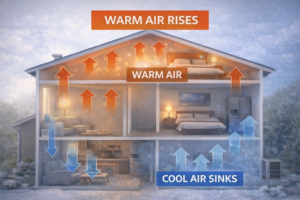
Poor Air Mixing Makes It Worse
Good HVAC systems don’t just heat air — they move it.
When air circulation is weak or unbalanced, rooms develop hot and cold pockets. You might notice:
-
Bedrooms that feel colder than living areas
-
Cold floors in the morning
-
Drafty hallways
-
One level warmer than another
Often this points to airflow issues like undersized ductwork, dirty filters, blocked returns, or improperly balanced systems.
At Healthy Water and Air, we frequently see homes that could dramatically improve comfort with simple airflow adjustments or better filtration. Improving your overall indoor air quality and circulation can make a space feel warmer without increasing thermostat settings.
Circulation Stress and Your Body
Here’s the part most homeowners don’t think about: your body reacts to air temperature differences quickly.
When the air around your hands and feet is cooler:
-
Blood vessels constrict
-
Circulation decreases at extremities
-
You feel cold faster
According to the Cleveland Clinic, cold indoor environments can trigger peripheral vasoconstriction, which reduces blood flow to fingers and toes (clevelandclinic.org).
So even if the thermostat says “comfortable,” your body may be responding to cooler air pooling near the floor.
Add Utah’s dry winter air — often below 30% indoor humidity — and skin loses heat even faster. The Environmental Protection Agency notes that maintaining proper humidity levels improves comfort and perceived warmth (epa.gov).
Signs Your Home Has Stratification Issues
If you’re wondering whether this applies to you, here are common Utah-home clues:
-
You constantly adjust the thermostat but never feel quite warm
-
Ceiling fans collect dust because they’re never used in winter
-
Your upstairs feels stuffy while downstairs feels chilly
-
You wear socks indoors year-round
-
Your furnace runs frequently but comfort is uneven
Sound familiar?
Why Utah Homes Are Especially Prone
Salt Lake Valley inversion season keeps homes sealed tight. Park City and Heber homes often have higher ceilings. Layton and Bountiful homes frequently deal with older duct systems.
All of these factors contribute to poor air distribution.
Additionally, hard water buildup (a common Utah issue) can affect humidifiers and HVAC components over time. If you’re already addressing mineral buildup with a whole-home water softener system, it’s worth ensuring your HVAC equipment is operating efficiently too.
Comfort isn’t just about temperature — it’s about balanced systems working together.
Simple Ways to Improve Warmth Indoors
Before cranking the thermostat higher (and raising energy bills), try these strategies.
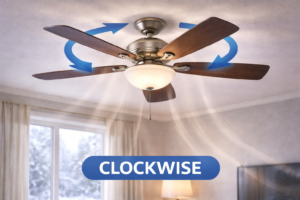
Reverse Your Ceiling Fans
Set fans to spin clockwise at low speed in winter. This gently pushes warm air down without creating a draft.
According to Energy.gov, this simple adjustment can reduce heating costs while improving comfort (energy.gov).
Check Your Air Filter
A clogged filter restricts airflow and worsens temperature imbalance. Replacing filters regularly supports better HVAC airflow performance and indoor air quality.
If you’re unsure what filter your system needs, our indoor air quality solutions page explains the differences between filtration types.
Use Humidity to Your Advantage
Maintaining 30–40% indoor humidity can make air feel warmer at the same temperature. Whole-home humidifiers are especially helpful during Utah winters when outdoor air is extremely dry.
Balanced humidity also supports respiratory health and reduces static electricity.
Balance Your Ductwork
Air balancing ensures each room receives appropriate airflow. This is especially important in multi-level homes in Sandy or Draper where upstairs rooms overheat and downstairs rooms stay cold.
Upgrade to Better Air Circulation Systems
Modern HVAC systems are designed for continuous air circulation, not just on/off heating cycles. Variable-speed systems mix air more evenly and reduce stratification.
If you’re exploring upgrades, you can review HVAC system options for Utah homes to see what fits your layout and climate needs.
When It’s Time for a Professional Assessment
If you’ve tried simple fixes and still feel cold at the edges, it may be time to look deeper.
Professional airflow diagnostics can identify:
-
Duct leakage
-
Poor return placement
-
Static pressure issues
-
Furnace short cycling
-
Inadequate system sizing
Many homeowners are surprised to learn their system is technically “working” — just not distributing air properly.
Need Help? Call (801) 609-1551 or schedule an appointment online.
Comfort Shouldn’t Stop at Your Core
You shouldn’t have to wear gloves inside your own house in Bountiful. Or wake up to freezing toes in Layton. Or constantly argue about the thermostat in Salt Lake City.
Cold hands and feet indoors usually aren’t a mystery medical issue.
They’re a home airflow issue.
When air mixes properly, humidity is balanced, and circulation improves, comfort feels even — from ceiling to floor.
And that’s how a Utah home should feel all winter long.
References
-
U.S. Department of Energy – Heating and Air Distribution: https://www.energy.gov/energysaver/heat-distribution-systems
-
Environmental Protection Agency – Indoor Air Quality Basics: https://www.epa.gov/air-quality/indoor-air-quality
-
Cleveland Clinic – Cold Hands and Circulation: https://my.clevelandclinic.org/health/symptoms/17861-cold-hands
-
ASHRAE – Thermal Comfort Standards: https://www.ashrae.org/file%20library/technical%20resources/standards%20and%20guidelines/standards%20addenda/55_2017_d_20200731.pdf