Why Your Home Smells Metallic Sometimes

Ever walk into your kitchen or bathroom and notice a faint metallic smell — almost like pennies or wet iron? You’re not imagining it.
In many Utah homes, that metallic odor is tied directly to pipe oxidation and changing water chemistry, especially in areas like Salt Lake City, Sandy, Draper, Bountiful, and Layton where mineral-heavy water is common.
Let’s break down what’s actually happening — and what you can do about it.
What That Metallic Smell Really Means
A metallic smell in your home is often connected to your water supply. When you run the tap, shower, or washing machine, water interacts with your plumbing system. If oxidation is occurring inside your pipes, small amounts of dissolved metals can be released.
Common culprits include:
-
Iron
-
Copper
-
Manganese
-
Zinc
Even in small concentrations, these metals can create a noticeable odor — especially in warm water.
According to the U.S. Environmental Protection Agency (EPA), elevated levels of iron and manganese in water can cause metallic taste and odor issues (epa.gov/ground-water-and-drinking-water).
And here in Utah? Hard water makes the situation more likely.

Pipe Oxidation in Utah Homes
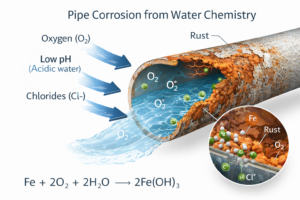
Oxidation is a natural chemical reaction that happens when metal pipes interact with oxygen and water over time. Think of it like rust forming inside plumbing lines.
Older homes in Bountiful or Layton with galvanized steel pipes are especially prone to internal corrosion. Even copper pipes, which are common in Sandy and Draper homes built in the 80s and 90s, can oxidize under certain water chemistry conditions.
The American Water Works Association explains that corrosion in plumbing systems is influenced by pH levels, alkalinity, temperature, and dissolved oxygen (awwa.org).
So if your water chemistry shifts — even slightly — it can accelerate pipe reactions.
Why It Smells Stronger Sometimes
You might notice the smell more:
-
First thing in the morning
-
After water hasn’t been used for hours
-
When running hot water
-
During seasonal changes
That’s not random.
When water sits in pipes overnight, it has more time to interact with the pipe material. The longer contact time allows more dissolved metals to enter the water. Warm water also speeds up chemical reactions, which is why showers sometimes trigger that metallic odor more than cold taps.
In winter, especially during inversion season in Salt Lake Valley, homes are sealed tight. Limited ventilation can make indoor odors linger longer.
Hard Water and Water Chemistry
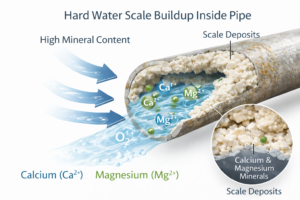
Utah is known for hard water. The Utah Geological Survey confirms that many regions across the Wasatch Front have high mineral concentrations, particularly calcium and magnesium (utah.gov).
Hard water itself doesn’t always smell metallic — but it contributes to scale buildup inside pipes and water heaters. Over time, that buildup can:
-
Create micro-corrosion spots
-
Trap iron particles
-
Change water flow patterns
-
Affect pH balance
That combination can amplify metallic smells.
Installing a properly sized whole-home water softener system helps reduce scale formation and stabilize water chemistry, which can reduce pipe stress over time.
Is It Dangerous?
In most cases, a mild metallic smell is more of a nuisance than a health threat. However, noticeable changes in odor, color, or taste should always be evaluated.
The Centers for Disease Control and Prevention (CDC) notes that corroded plumbing can sometimes contribute to elevated metal levels in drinking water, particularly in older systems (cdc.gov).
If your water ever appears discolored (brown, orange, or bluish tint), that’s a stronger sign of corrosion and should be tested.
Signs Pipe Oxidation May Be Happening
Here are some common red flags homeowners in Park City, Heber, or Salt Lake City might notice:
-
Metallic or “bloody” smell near sinks
-
Blue-green staining around drains (copper corrosion)
-
Reddish-brown staining in tubs (iron)
-
Water that smells stronger when hot
-
Reduced water pressure over time
If multiple signs appear together, it’s worth investigating your plumbing system more closely.
The Role of Water Heaters
Water heaters are often overlooked in odor issues.
Sediment buildup — especially in hard water areas like Draper or Sandy — can accelerate corrosion inside the tank. The U.S. Department of Energy explains that sediment accumulation reduces efficiency and increases wear on heating elements (energy.gov).
When sediment reacts with heated metal surfaces, it can intensify metallic or sulfur-like smells.
Regular maintenance or upgrading to a high-efficiency system can help prevent ongoing issues.
Solutions That Actually Help
Fortunately, metallic smells are usually fixable.
Water Testing First
Start with professional water testing to evaluate:
-
Iron levels
-
Copper concentration
-
pH balance
-
Hardness
-
Total dissolved solids
Understanding your water chemistry is the first step toward the right solution.
Install a Water Softener
A properly calibrated water softener system reduces mineral scale that contributes to corrosion stress.
Consider Whole-Home Filtration
Advanced filtration systems can reduce iron, manganese, and other dissolved metals that affect taste and odor.
If you’re exploring options, Healthy Water and Air offers customized water treatment solutions tailored to Utah’s mineral profile.
Inspect Aging Plumbing
If your home has older galvanized pipes, replacement may eventually be necessary. Modern PEX or updated copper systems are less prone to internal corrosion under balanced water conditions.
Don’t Ignore Recurring Odors
A metallic smell that comes and goes may seem harmless. But over time, corrosion inside pipes can worsen.
And because many Utah homes deal with both hard water and fluctuating seasonal water chemistry, small issues can quietly build.
If you’re unsure what’s causing the odor — or if it’s getting stronger — a professional assessment can pinpoint the source.
Need service? Call (801) 609-1551 or schedule an appointment online.
Clean Water Should Smell Like… Nothing
At the end of the day, your water shouldn’t smell like coins.
It shouldn’t leave stains, strange odors, or lingering metallic air in your bathroom.
Balanced water chemistry and healthy plumbing systems make a noticeable difference — not just in smell, but in taste, appliance longevity, and overall home comfort.
And here in Utah, where mineral-rich water is just part of life, proactive solutions go a long way.
References
-
U.S. Environmental Protection Agency – Secondary Drinking Water Standards: https://www.epa.gov/sdwa/secondary-drinking-water-standards-guidance-nuisance-chemicals
-
Penn State Extension – Corrosive Water Problems: https://extension.psu.edu/corrosive-water-problems
-
Centers for Disease Control and Prevention – Drinking Water and Plumbing: https://www.cdc.gov/drinking-water/
-
U.S. Department of Energy – Water Heater Maintenance: https://www.energy.gov/energysaver/storage-water-heaters
